Practice
Sananga
A traditional Amazonian eye medicine, offered with reverence. People often describe a short, intense meeting and then a quieter seeing — that is their report, not a medical promise.
18+. Hapé and sananga are offered only to adults. They are not for children or young people under 18.
These pages describe traditional and personal practices. They are not medical advice, a diagnosis, or a treatment. Experiences vary. If you are unwell, speak to a GP or another clinician as well as David. Terms of use.
Where it comes from
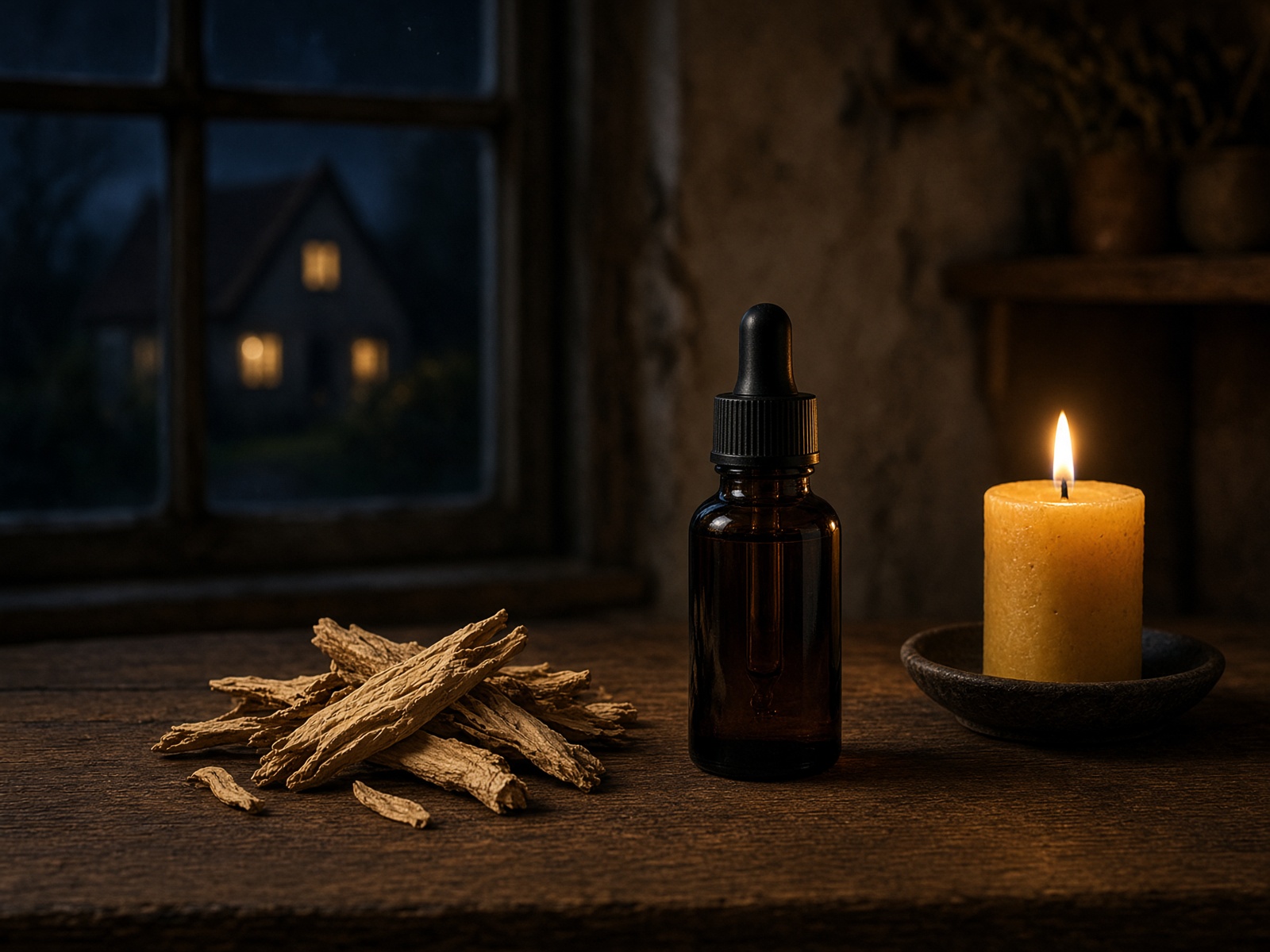
Sananga is a traditional Amazonian eye medicine prepared from the root bark of Tabernaemontana shrubs (often T. undulata or T. sananho). Among some western Amazonian peoples it has been used by hunters and healers in relation to seeing — physical, practical, and in their own spiritual language. It is not a psychedelic. It is brief, intense, and old. We do not claim it treats eye disease.
What it is
A few drops are placed in each eye. There is a sharp burning — that is expected — followed by tears, then often a quieter few minutes. People describe colours as clearer, the mind as less busy, or a rinsed feeling. Those are personal accounts. The intensity typically peaks within a minute or two and eases over five to fifteen minutes.
David offers sananga in a held setting, often alongside hapé. You will be invited to lie back or sit supported. You do not apply this yourself in a first ceremony. The work is to receive, breathe, and not fight the sensation.
What to expect
- A strong sting or heat in the eyes. This is the medicine meeting you, not a sign that something has gone wrong.
- Tearing, flushing, and a few minutes of not wanting to open the eyes fully.
- Afterwards, people often describe softness, focus, unexpected feeling, or simple calm. Experiences vary.
- You will not hallucinate. You may feel more here, not less.
How to work with it
- 01
Remove what does not belong
Take out contact lenses. Set glasses aside. Wash your hands if you will touch your face. Make sure the space is calm and that you can lie back without rushing.
- 02
Receive the drops
Look up. One or two drops per eye is a common ceremonial amount — David will dose. Keep the eyes open just long enough to receive, then close. Do not rub. Rubbing spreads the medicine and agitates the surface of the eye.
- 03
Breathe through the burn
This is the practice. Long exhales. Hands on the belly or the earth. The mind will want to escape; bring it back to breath. The burning is finite. On the other side of it is space.
- 04
Rest in the dark
Stay lying down until the sting has clearly passed. Sit up slowly. Give your vision a minute to settle before standing, using a screen, or walking in bright light.
Prepare
- Remove contact lenses before you arrive, or bring a case.
- Do not apply makeup around the eyes.
- Tell David about any eye condition, recent surgery, infection, or glaucoma.
- Plan not to drive immediately if you feel undone. Arrange a quiet ride home if you can.
Aftercare
- Do not put contacts back in until the eyes feel completely normal — often the next day.
- Avoid swimming, saunas, and dusty wind for the rest of the evening.
- If the eyes remain very red or painful beyond the usual window, seek medical care.
- Journal while the inner quiet is still with you. Sananga often shows what you have been looking past.
Safety
- Sananga is for adults 18 and over.
- Do not use sananga if you have glaucoma, an active eye infection, corneal disease, severe dry eye, or recent eye surgery or injury.
- Never share droppers. Hygiene is not optional.
- This is not a treatment for eye disease and not a substitute for an optician or GP.
- First times belong in a held ceremony, not alone in a bathroom.
Often received after hapé, then followed by meditation or sound.