Practice
Reiki
A quiet, clothed Japanese practice of rest and attention. Many people find it deeply relaxing; it is complementary, not a medical treatment.
These pages describe traditional and personal practices. They are not medical advice, a diagnosis, or a treatment. Experiences vary. If you are unwell, speak to a GP or another clinician as well as David. Terms of use.
Where it comes from
Reiki is a Japanese practice of hands-on (or hovering) attention, commonly traced to Mikao Usui. It is quiet, clothed, and non-invasive. David completed his Reiki training and initiations in 2024 and offers it as a gentle counterpart to plant ceremony — an invitation to rest, without intensity.
What it is
You remain dressed and lie down. Hands rest lightly on or just above the body in a sequence. Most people drop into a deep, wakeful rest. Some feel warmth, tingling, or feeling without a story. Some simply sleep and wake quieter. There is nothing you have to believe; rest itself can be useful.
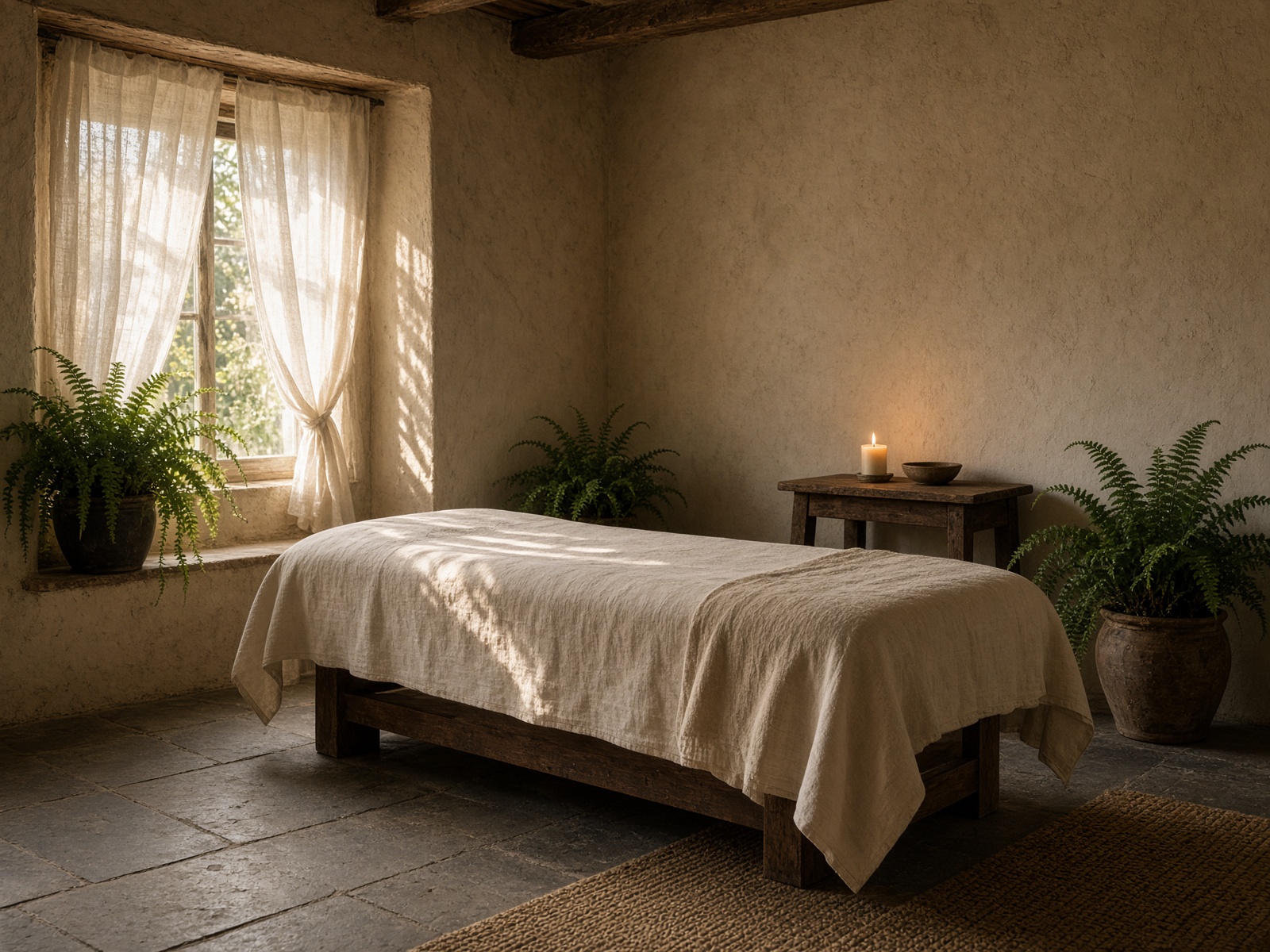
Sessions are one-to-one in Heckfield. The room is unhurried. You can talk at the start about what you are carrying, or say very little. The work meets you as you are.
What to expect
- A slow, warm session — more spa-quiet than dramatic.
- You may drift in and out of sleep. That is allowed.
- Emotions can surface without a story attached. You do not have to explain them.
- Afterwards, people often feel heavy-limbed, calm, and a little more themselves.
How to work with it
- 01
Before you arrive
Eat something light. Avoid rushing. Wear comfortable clothes. You will not need to undress. If you are new, you do not need to study Reiki first.
- 02
On the table
Lie on your back. Let the jaw unclench. If a position hurts, say so. You can ask for more pressure, less pressure, or a pause at any time. Reiki is consent-led.
- 03
What to do with your mind
You do not have to visualise white light or “open your chakras.” Notice breath, weight, and warmth. When the mind wanders — it will — come back to the contact of the table.
- 04
Closing
Sit up slowly. Drink water. Take a minute before you pick up your phone. A short walk afterwards helps the session land in ordinary life.
Prepare
- Come as you are. There is no performance of being spiritual.
- Mention injuries, pregnancy, or anything you do not want touched.
- Allow time after the session so you are not leaping into a motorway.
Aftercare
- Hydrate. Rest if you are tired — integration often looks like an early night.
- Notice sleep, mood, and how you speak to yourself over the next day.
- A journal line or two is enough. You do not need to capture everything.
Safety
- Reiki is complementary. It does not diagnose, treat or replace medical or psychological care.
- Tell David if you are in acute crisis — the right support may be a GP, 111, or a trusted person, not only a treatment table.
A stand-alone session, or as integration after ceremony.